
Here’s a glimpse into my story of colon cancer survival. For the full story, check out my memoir Blush: How I Barely Survived 17.
Around the 8th grade at age 14, just before finishing junior high, I began to see red specks in the toilet after I'd go "number two." I assumed it was no big deal, and I even reasoned with myself. I didn't know teenagers could get colon cancer.
"Maybe it's ketchup. Or Twizzlers. Or tomatoes," I hoped.
I put myself on a "no red foods" diet and expected my problem to go away. It did—at first. But then, the red came back. Yet I stayed silent. I didn't know blood in the stool was a sign of colon cancer in teens. Any weight loss I saw I counted a victory.
As a volleyball player who barely walked onto the court because of the tight, spandex shorts, I was embarrassed about my body. Mortified, actually. The last thing I needed was people knowing what I saw when I pooped. So I kept it secret for a really long time.
It must be hemorrhoids
Eventually, I accepted that the red specks I kept seeing were indeed due to bleeding. Yet the blood kept changing. One day, the specks would be bright red, yet other days, they'd look darker. Finally, I broke down and decided to ask for help. A blushing high schooler, I confided in my mom about the blood and she looked it up online.
This was 2001, the Internet was new. The websites we found indicated it must be hemorrhoids. I'd never faced ulcerative colitis, Crohn's or anything like that.
Other causes of blood in the stool and risk factors were mentioned on the website, but it said they were indicators of serious conditions that only happened to older people—like Grandma and Grandpa.
“What a relief,” I thought to myself as I assumed I had some 'roids.
From red to black stools
The blood in the stool kept coming. In fact, it eventually became normal. If I went "number two" and didn't see it, that was weird. But one day, I began seeing more blood than usual, and it turned dark red and black. Severe stomach pains soon appeared for no reason, and I was really fatigued. It was not normal for a high schooler. I finally confided in my boyfriend, Mike, that something was wrong.
"I think I need to see a doctor." Fortunately, he began to pester me to go.
Diagnosed with colon cancer
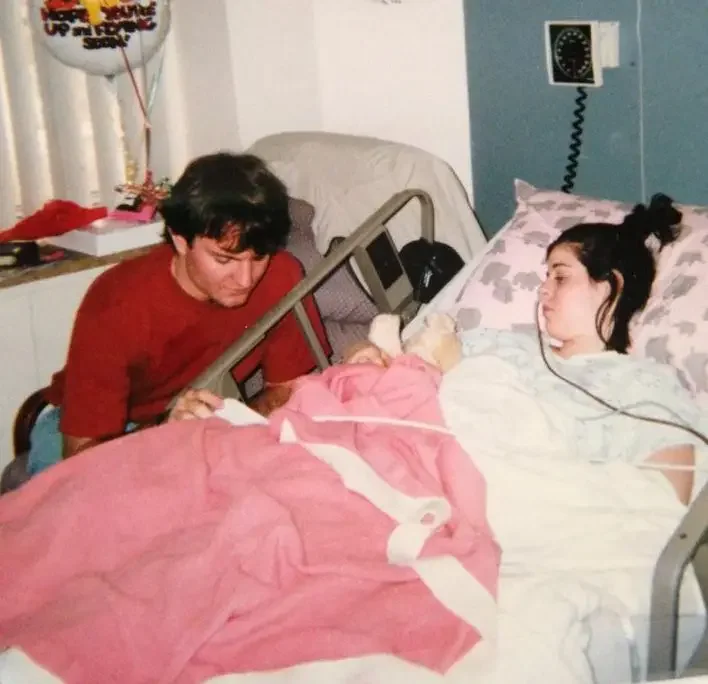
Mike kept insisting that I visit a doctor but I didn't want to. My problem wasn't that bad, or so I thought, and I had other things on my mind. But one day, my parents overheard Mike's insistence and realized something was very wrong. I was rushed to a gastroenterologist (GI), Dr. Marc Taormina, who insisted we do a colonoscopy.
I soon became very grateful for his insistence that we do a colonoscopy despite me being a teenager. His decision helped save my life. Nobody, and I mean nobody, expected he would discover the source of my bleeding: a tumor... stage 3 colon cancer. This all happened three weeks after my birthday. I had colorectal cancer at age 17.
Unicorn: a teen colon cancer survivor
My days of high school algebra quickly turned into colon talk, cancer hospitals and itchy, scratchy hospital gowns.
“You are SO young - we’ve never seen colon cancer in a teenager,” many doctors and nurses would soon say. I felt like a unicorn in the oncology ward.
I eventually started chemotherapy treatment, FOLFIRI, because doctors wanted to, "hit it hard." I’d never been so sick; it was worse than the flu. I puked for days after the infusions. My mouth hurt from mouth sores, and I could taste medicine in my spit. I began radiation, too, since my tumor was at the junction of the colon and rectum. I was treated for both colon cancer and rectal cancer. I had burns on my rear and eating became a chore. Nothing about cancer treatment came easy, and the side effects of treatment hit me hard.
It was pretty strange to be both a teenager and a cancer patient. I didn't fully realize that my life was on the line. Colon cancer wasn't supposed to happen to many 17 year olds, yet it was happening to me. I was tired, sunburned, skinny and weak. Yet, full of faith, I also believed God could use my illness to spice up my testimony. I believed He would help me survive.
Searching for normal
The hope of getting back to a “normal” life kept me going as a colon cancer survivor, as well as ignorant bliss and young love. Although my health had tanked, my love life was going strong. Despite the setbacks during treatment, I did make it to junior prom.
After six months of chemo, 30 days of radiation and two major surgeries, I was done. I walked away from cancer, declared a survivor with "no evidence of disease." A few weeks later, I returned to school for my senior year of high school. Cancer was a fluke of my past, or so I thought.
Colon cancer in my 20s
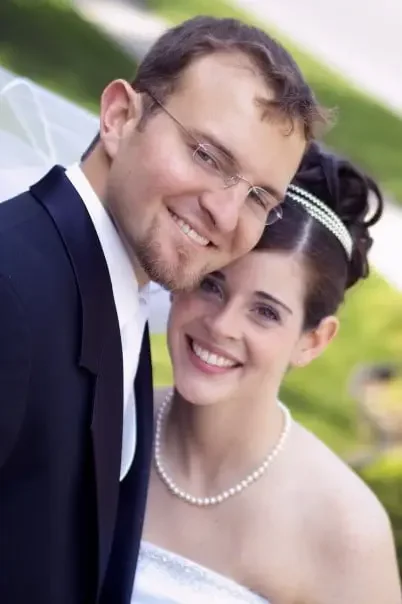
With cancer behind me, I focused on life ahead. College, new friends and a wedding—it was why I'd fought to live. Five years after we first started dating, the guy who insisted I see a doctor slipped a ring on my finger as we both said, "I do." Getting married was a dream come true. With cancer behind us, we were over "in sickness" and so ready for "in health."
Although I had moved on cancer, something tugged at me to tell my story. I ended up finding The Colon Club and was chosen to model for its 2009 Colondar, an experience that introduced me to patient advocacy.
Not long after my first advocacy experience, I had a routine colonoscopy and woke up to familiar stares and concerns: Adenomas polyps, to be precise. One finding looked really concerning. Dr. Taormina offered a bold recommendation: a subtotal colectomy, which meant another colon surgery. None of us expected the pathology reports to come back and show stage I colon cancer. Fortunately, we caught it in its early stages.
At age 25, I became a two-time colon cancer survivor. It was hard.

tw0-time survivor
Surviving cancer once was hard, but facing it a second time in my 20s brought a totally new experience.
A flood of fear, anxiety and anger rushed in. I doubted, questioned and got really angry with God. My marriage was strained and I began to really resent my body and have even more body image issues.
I didn't care that the cancer itself was less life-threatening or that doctors felt good about catching it early and me not needing more treatment. While my body may have rebounded faster than my first cancer, my heart and mind took a huge hit.
Going to Counseling
After a hard few months of trying to handle colon cancer in my 20s on my own, I finally recognized that I needed help. I began counseling, which quickly turned into trauma therapy. As part of my healing process, I started blogging. Over time, my body, heart and soul began to heal again and open up to what came next.
adoption after cancer
Mike and I always knew we’d adopt. From the day we said our “I dos,” we knew we could not conceive a baby naturally because of surgeries I’d undergone when I was 17. After four years into married life, we had started to think about building a family. We were surprised by all of the adoption options. There was international, domestic, foster-to-adopt and private. It was all a foreign language to us, but something about international adoption gripped my heart.
We began researching agencies and talking to friends. I soon learned about country restrictions on international adoptions for cancer survivors. Unfortunately, my second colon cancer diagnosis changed things because many adoption agencies want the adoptive parents to be at least 5-years “cancer free.” Our plans were interrupted, to say the least.
Eventually, we accepted the unforeseen path and began pursuing domestic adoption. I found a domestic adoption agency without a “cancer clause,” meaning if I had a clean bill of health from my doctor, they were willing to work with us. We filled out all the papers, and to our surprise, the day we went active online was the same day a local birth mom chose us to be her daughter’s forever family.
The story was a complete whirlwind, and from start to finish, lasted three weeks. But our dreams of parents came true as we adopted a beautiful baby girl.
Colorectal Cancer Advocacy
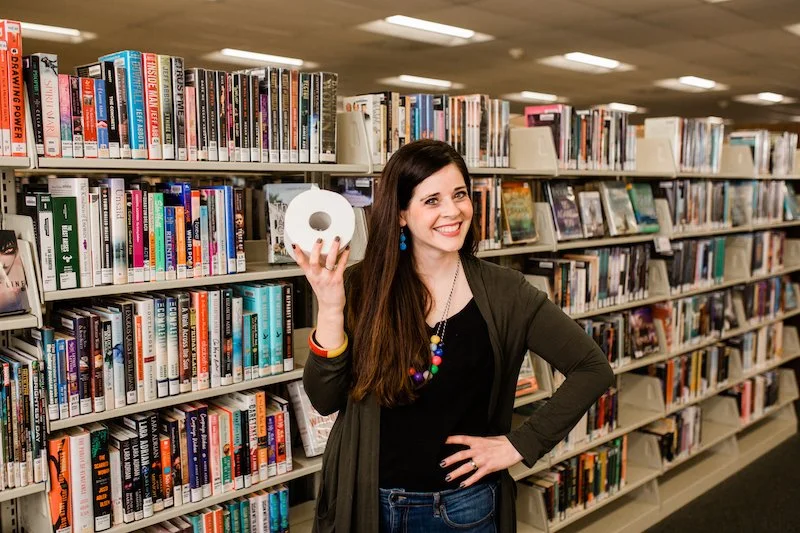
I stayed involved in The Colon Club, volunteering to do press releases and write the stories of the new models. I eventually joined the board. The community eventually led to me meeting Fight Colorectal Cancer (Fight CRC) and being asked to take on some freelance work for them. I was flabbergasted when they offered me a dream job, Communications Director. I began to criss-cross the country to tell my story and the stories of many others. Our big awareness campaigns and patient education projects gave my personal cancer experience meaning and purpose.
My community exploded as I met incredible patients and caregivers from all over the world.
Lynch Syndrome
It was right around this time, answers as to what was behind colon cancer at age 17 and 25 came into place.
Genetic testing after each of my two cancers indicated a "variant of unknown significance." Yet thanks to my double-dose of cancer and extremely young age, doctors began treating me like a Lynch syndrome patient. Per the recommendations, I had a total hysterectomy and switched to yearly colonoscopies.
One day many years later in 2013, the genetic laboratory reclassified my MLH1 mutation and contacted me with the news: I officially have Lynch syndrome. But more curve balls came when neither my mom nor dad tested positive for the same gene variant. I have an inherited genetic disease, but I didn’t inherit it.
I am the "de novo" patient, meaning I'm the first.
Colon cancer in my 30s
Knowing I had Lynch syndrome, my follow-up scans were aggressive. This turned out to be a good thing, because an annual colonoscopy led to more concerns in 2023 - a situation similar to what I’d experienced when diagnosed with my second cancer.
I’d experienced troubling side effects for years due to the radiation and treatments in my teens. Between the exhaustion of colonoscopies and the fear of recurrence, I took my doctors’ recommendations and decided to go ahead and get a permanent ileostomy. It was a surgery I’d feared (my worst nightmare!) as a teenager, but over the years, something had changed.
For one, I felt awful most days and my quality of life was suffering. But the advocacy community had also introduced me to so many incredible people living a full life with an ostomy, I knew I was ready.
I scheduled the surgery in April 2023. It wasn’t an ideal time since we were also foster parents to a toddler and anxiously waiting for an adoption opportunity. But the past had taught me not to delay surgery. I was thankful when I woke up and was told the same thing as years prior: surgery went well but they’d found stage I cancer again.
I’d been diagnosed with my third colon cancer at age 39. Yet in that moment, I wasn’t afraid. I wasn’t angry. I was relieved. With my entire large intestine removed, I could never get colorectal cancer again.
Faith can survive.
Today, I am healthy, strong and cancer-free! Through surviving cancer in my teens, 20s, and 30s, I’ve learned it's a physical, emotional, mental and spiritual disease.
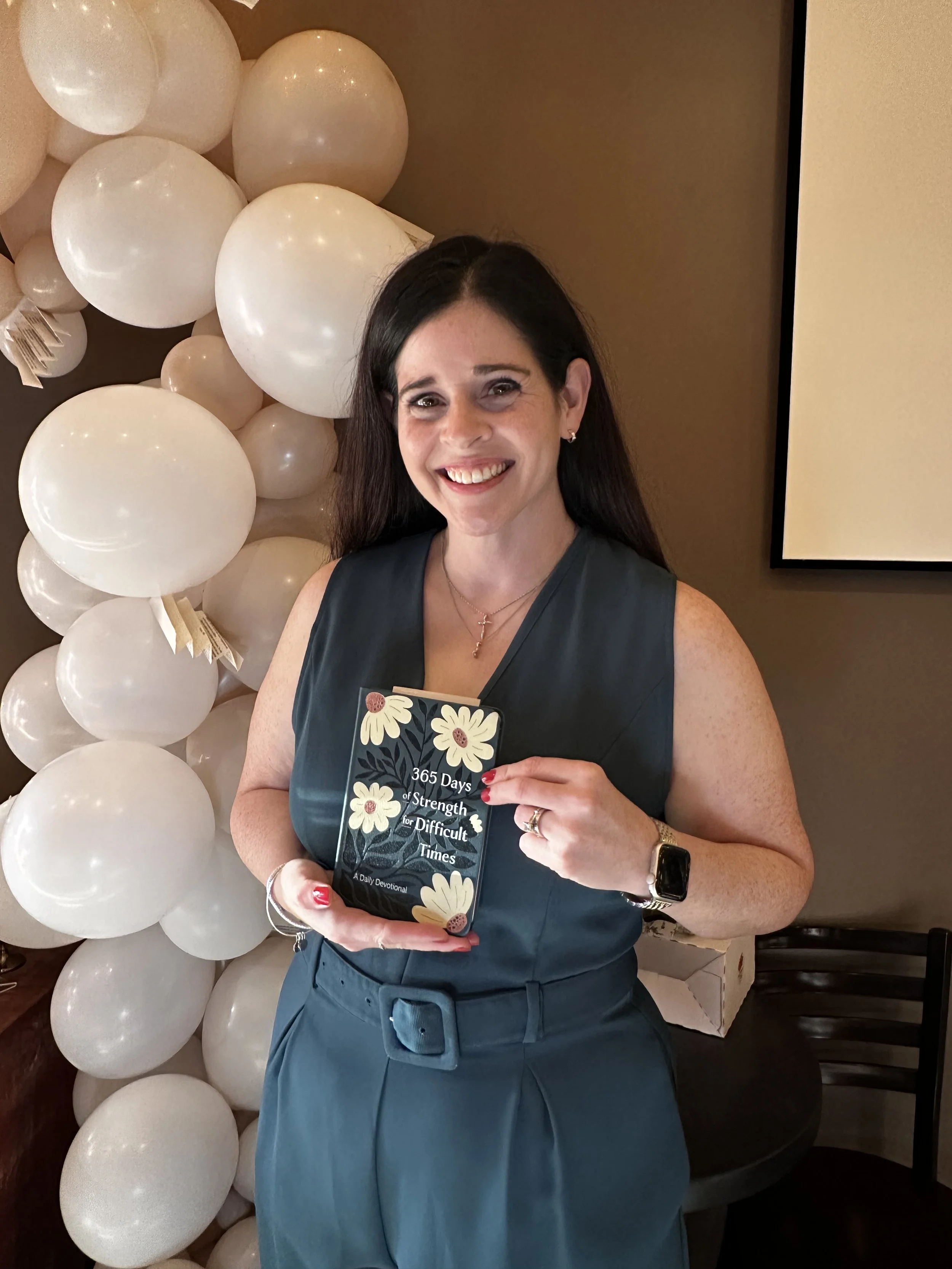
My experience has led me to wrote books and become an inspirational speaker. I also write a Substack called Faith that Survives to help anyone else shattered by the news of a difficult time.
Even when our bodies break, our faith can survive.